

Diesel injection faults, found and fixed properly
Diesel fuel injection Hamilton work at Turbo & Diesel, authorised Bosch, Delphi and Garrett agents on Kahikatea Drive in Frankton. Fuel injection test room, manufacturer-spec scan tools, MTA workshop with over twenty years of specialist diesel experience for Waikato drivers.
4.6 from 53 Google reviews 20+ years 10,000+ vehicles serviced
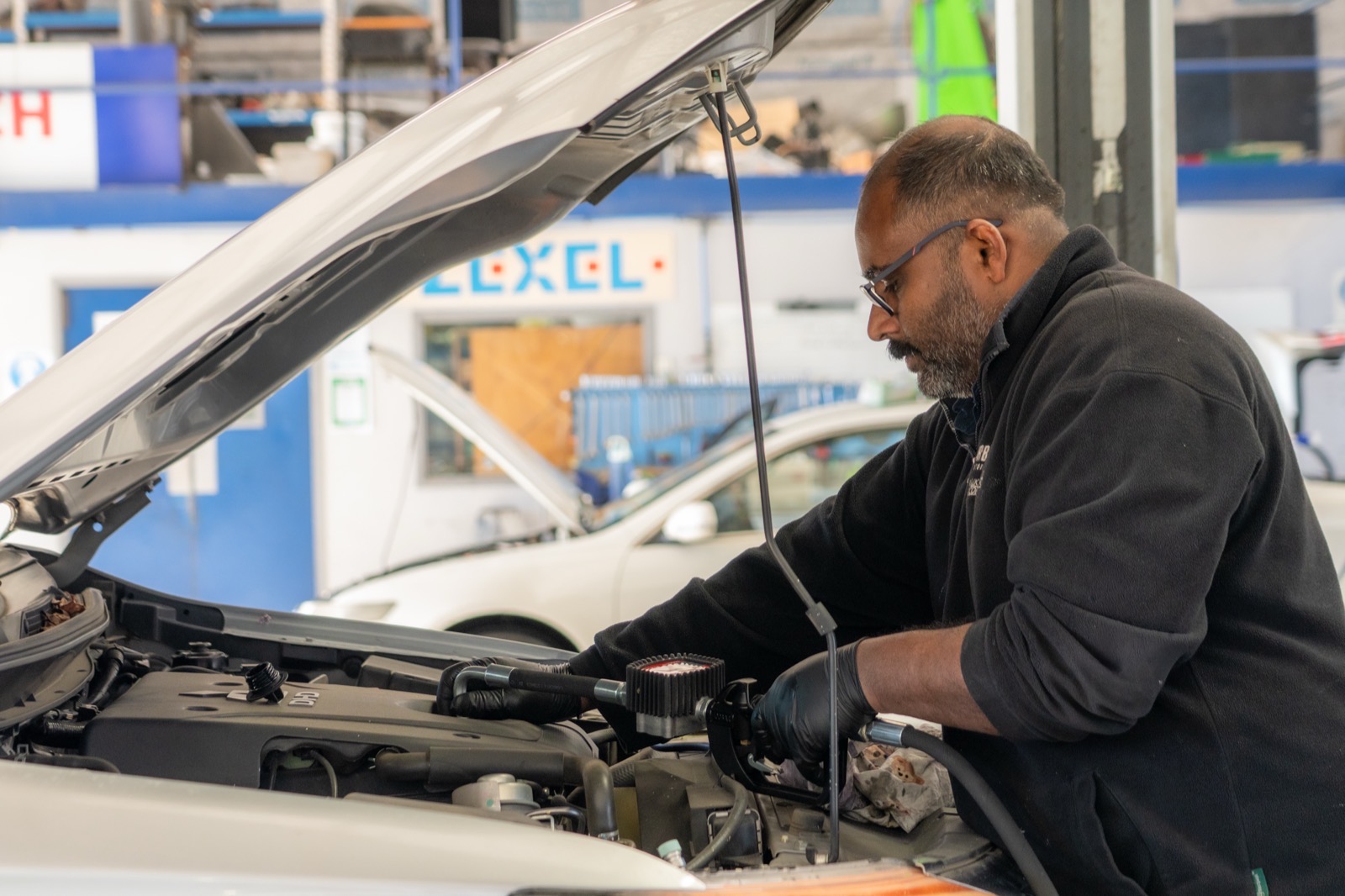
Why diesel fuel injection is done differently here
Real photos from the floor on Kahikatea Drive. Same team, same hoists, same standards on every job, from a quick check through to a full strip-down.






What you get when you book this service
11 checks performed on every visit
- Live data scan of rail pressure, injector correction values, EGR and DPF status against manufacturer specs
- Common rail injector flow testing in our fuel injection test room
- High-pressure pump testing, with rebuild work carried out through trusted specialist partners or remanufactured pumps supplied where rebuild is not economical
- Electronic Control Module fault diagnosis with manufacturer-level scan tools
- Genuine Bosch and Delphi parts supply via authorised channels
- Contaminated-fuel recovery, tank drain, fuel filter renewal, injector and pump assessment
- DPF and EGR-related fuel system work where issues are linked
- Cold-start diagnostics including glow plug and combustion testing
- Boost pressure and intake leak testing when boost-side faults mimic injection faults
- Recalibration to factory specifications and full road test before vehicle release
- Written report covering what was found, what was fixed, and recommended next steps
Want diesel fuel injection done right?
Phone the workshop or send a quick form, whichever suits you. We come back with a clear next step.
4.6 from 53 Google reviews 20+ years 10,000+ vehicles serviced
Why Hamilton trusts us with diesel fuel injection
-
Authorised diesel agents
Authorised by Bosch, Delphi and Garrett, with factory training and manufacturer-spec test equipment, not generic OBD readers.
-
Dedicated fuel injection test room
Our calibrated injector test room lets us measure flow, return and back-leak properly. Most workshops do not have this on site.
-
Right first time
Bench-tested components and live system data mean the fix is verified before you collect the vehicle, not guesswork against fault codes.
-
Commercial and fleet diesel
From owner-driver Hilux utes to fleet light trucks and motorhomes, we cover the diesel work most general workshops outsource.
-
Twenty years on Kahikatea Drive
Diesel injection has been our specialty since 2003. Same workshop, same team, same standards.
Simple, transparent process
- 01
Live data and scan
We read fault codes, log live rail pressure under load, check injector correction values and pull historic freeze-frame data from the ECM.
- 02
Bench test
If symptoms point to injectors or the high-pressure pump, parts come off the vehicle and onto the calibrated bench in our fuel injection test room for flow, return and back-leak testing.
- 03
Repair or replace
Faulty injectors and pumps are sent to trusted specialist partners for rebuild with genuine internals, or replaced with remanufactured units.
- 04
Recalibrate and verify
Injector trim codes are programmed to the ECM, the system is bled and re-pressurised, and the vehicle is road-tested against factory specs.
Trained to the standards behind your vehicle
Everything you should know about diesel fuel injection
A workshop perspective on what's involved, how we run the job, and what shapes the final cost.
Why diesel fuel injection work in Hamilton needs a specialist
A common rail diesel can run at rail pressures north of 2,000 bar, and the injection event for a single combustion cycle is split across pilot, main and post pulses measured in fractions of a millisecond. The tolerances inside an injector are tighter than a hair's width.
A generic OBD reader on its own tells you the ECM is unhappy. The diagnosis still requires someone who knows what rail pressure should be doing under load, what injector correction values mean, and what a back-leak test reveals. This matters most on common-rail platforms where the cost of getting the diagnosis wrong is high:
- Hilux, Ranger, BT-50 and Triton utes
- Pajero and Prado SUVs
- Motorhome platforms: Hiace, NV350 and Coaster
What our diesel fuel injection work covers
We work on every major common rail and traditional injection system on the New Zealand market:
- Bosch CP1, CP3 and CP4 high-pressure pumps
- Delphi DFP pumps and EUI / EUP unit injectors
- Bosch piezo and solenoid injectors, Delphi smart injectors
Diagnosis starts with manufacturer-level scan tools, not a hobby OBD reader. We log live data under load on a road test, so we see the system as it actually behaves:
- Rail pressure and injector correction trim
- Fuel temperature, MAF and MAP readings
- EGR position and DPF status
If the fault points at the injectors or the pump, those parts come out and onto the calibrated bench in our fuel injection test room. We measure delivered fuel volume and back-leak rate against factory specification, the only honest way to confirm an injector is good.
Where rebuild is feasible, trusted specialist partners replace nozzles, springs and control valves with genuine internals and recalibrate. Where it is not, we source remanufactured or new units via authorised Bosch and Delphi channels. After fitment, injector trim codes are programmed to the ECM, the fuel system is bled and re-pressurised, glow plugs and air intake are checked, and the vehicle is road-tested against factory specs before it leaves.
Diesel injector testing
Injector testing is how we tell a faulty injector apart from a fault that only looks like one. It happens in two stages.
First, on the vehicle. A manufacturer-level scan tool reads injector correction values and rail pressure while we log live data on a road test. That shows whether one injector is working harder than the others, or whether the whole system is struggling.
Then, on the bench. If the data points at the injectors, they come out and go onto the calibrated test rig in our fuel injection test room. Each injector runs at controlled rail pressure and we measure:
- Delivered fuel volume at idle, full load and pilot injection points
- Back-leak rate through the control valve
The results are compared with the manufacturer's specification chart, so you know which injectors are good and which are not before anything is replaced. That matters because injectors are an expensive part to guess at. Smoke, a rough idle or a misfire can just as easily come from a sticking EGR valve, a boost leak or contaminated fuel. If your diesel is smoking, our guide to what each exhaust smoke colour means is a good place to start.
How a diesel injection job works at our Frankton workshop
You phone (07) 847 3339 with the symptoms: a hard start in the morning, white smoke at idle, a misfire above 2,500 rpm, an EDC light. We book the vehicle for an initial diagnostic slot, usually one to two hours.
On the day, the scan tool comes out first, fault codes and freeze-frame data are pulled, and a road test logs live data under real load. If the picture points at injectors or the pump, we agree the next step with you before anything else happens. Components come off, go onto the bench in the fuel injection test room, and the results either confirm the diagnosis or redirect us: a sticking EGR valve, a partial DPF block, a leaking intercooler hose, a worn MAF sensor.
Where rebuild work is needed, it is carried out through trusted specialist partners. Trim codes are programmed, the fuel system is bled and re-pressurised, and a final road test confirms rail pressure and injector behaviour are back to manufacturer specification. You collect with a written report.
Diesel fuel filters and water in fuel
On a common rail diesel, the fuel filter is the cheapest protection the injection system has. It catches the dirt and water that would otherwise reach the high-pressure pump and injectors, which work to tolerances where a small particle or a little water does real damage. Most diesels also have a water separator that collects water out of the fuel, and on many vehicles a water-in-fuel warning light comes on when it needs draining.
Signs of a blocked fuel filter or water in the fuel include:
- Loss of power, especially under load or on hills
- Rough running, surging or misfiring
- Hard starting, or stalling soon after starting
- A water-in-fuel warning light on the dash
Fuel filters are part of our diesel servicing, renewed at the interval in your logbook. You can see where the fuel filter sits in our diesel vehicle inspection checklist. A filter that comes off dirty, slimy or wet is often the first sign of trouble in the tank, and a filter change on its own will not fix that.
Where the fuel is contaminated, we drain the tank, renew the fuel filters, and assess the high-pressure pump and injectors on the bench in our fuel injection test room, so you know whether any damage has been done before the vehicle goes back on the road. Water in diesel can also feed microbial growth, known as diesel bug. Our guide to diesel bug: signs, causes and how to get rid of it explains what to look for and why an additive on its own is rarely enough.
If the water-in-fuel light comes on, or you think you have had a bad tank of fuel, call (07) 847 3339 before you drive much further.
What affects the cost
Diesel injection work has more cost variables than most jobs, so we quote each one specifically:
- Parts availability: a Toyota Hilux 1KD with widely stocked injectors is a simpler job to source for than a less common European platform with longer lead times
- Severity: one bad injector is a different job from a full set; a contaminated-fuel recovery that has reached the high-pressure pump escalates fast
- Diagnostic time: clear fault codes with strong live data take an hour; intermittent faults across multiple systems can take three or four
- Parts grade: genuine vs remanufactured vs new; a properly remanufactured Bosch or Delphi unit is often the right commercial answer and we will say so when it is
- Access: engines where the inlet manifold has to come off to reach the injectors push the labour share up
Quotes are free. For a quote on your vehicle, call (07) 847 3339 or use the contact form.
Hamilton and Waikato coverage
Our fuel injection test room and workshop sit on Kahikatea Drive in Frankton, three minutes from the Hamilton ring road. Most of our diesel work comes from across the wider Waikato: utes and motorhomes from Cambridge and Te Awamutu, fleet vans from Morrinsville and Huntly, agricultural and contracting diesels from Ngaruawahia and out toward Raglan.
We hold injectors and pumps for the most common platforms in stock or available next-day, and we will confirm the parts route at the diagnostic stage so there are no surprises on timing. The workshop is open Monday to Friday, 7:30 AM to 4:30 PM.
Last reviewed and updated
Common Questions
Everything you might want to know before booking.
What are the symptoms of a faulty diesel injector?
Common signs are hard cold starting, black or white smoke under load, a rough or hunting idle, loss of power, poor fuel economy, and fault codes for misfire or rail pressure. A diesel knock that gets worse with load can also point at an injector. A live data log and a back-leak test usually narrow it down within an hour.
Can common rail injectors be repaired or do they need replacing?
Many common rail injectors can be flow-tested in our test room, then rebuilt with new internals, nozzles, springs and control valves through trusted specialist partners. Where the body is damaged or the design does not allow rebuild, we supply remanufactured or new units. We will recommend the path that gives the best value for your specific vehicle.
How long does a diesel injection job take?
A diagnostic scan and pressure test is usually about an hour. Removing, testing and refitting a set of injectors is typically one to two days depending on access and whether seats need machining. A full high-pressure pump rebuild, carried out through our specialist partners, is two to three days. We confirm timing once we have inspected the vehicle.
What causes diesel injector failure?
The main causes are contaminated fuel, missed fuel-filter changes, water in the fuel system, poor-quality biodiesel content, and high mileage where internal wear simply catches up. Modern common-rail injectors run at very high pressures with tight tolerances, so small particles do real damage over time.
How do you test a common rail injector?
On the bench, the injector is connected to a calibrated test rig that supplies controlled rail pressure. We measure delivered fuel volume at idle, full load and pilot injection points, plus the back-leak rate through the control valve. The results are compared to the manufacturer's specification chart. That is the only way to know an injector is good before it goes back in.
Will contaminated fuel damage my injection system?
Yes. Water in the fuel breaks down the lubricating film inside high-pressure pumps and injectors, and dirt or rust particles score the precision surfaces. If you have just had a bad tank of fuel, get it to us early. We can drain the tank, renew filters, assess the pump and injectors on the bench, and limit the damage before it costs you the whole system.
Is a fuel filter change part of a diesel service?
Yes. Fuel filters are part of our diesel servicing and are renewed at the interval in your logbook. If a filter comes off dirty, slimy or wet, that usually points to a problem in the tank, and we will talk you through what we found before anything else is done.
What should I do if the water-in-fuel light comes on?
Do not keep driving on it for long. The light means the water separator has collected water that needs draining, and water that gets past it can damage the high-pressure pump and injectors. Call us on (07) 847 3339 and we will check the water separator and the fuel, and renew the filter if it needs it.
Do you work on light trucks and commercial diesels?
Yes. Light trucks, vans, motorhomes, fleet utes and small buses are a core part of our diesel work. We hold authorisations across Bosch and Delphi injection systems used in most New Zealand light commercials, with parts routes for genuine and remanufactured supply.
What does an EDC fault code mean on my diesel?
EDC stands for Electronic Diesel Control, the engine's management system. An EDC light usually means the ECM has logged a fault somewhere in the injection, boost, emissions or sensor circuits and may have put the engine into limp mode to protect itself. We read the specific code with a manufacturer-level scan tool to know whether it is rail pressure, EGR, MAF, glow plug or injection-related.
Are remanufactured injectors as good as genuine?
A properly remanufactured Bosch or Delphi injector from an authorised reman programme is built with genuine internals, tested on the same calibration benches, and supplied with the same warranty as new. For most everyday diesels it is the better commercial choice. We will tell you which path makes sense on your vehicle.
Will diesel injection repairs affect my emissions or DPF?
All our work is done to manufacturer specifications so the vehicle stays within its emissions targets. Injection problems often cause DPF or EGR issues downstream, over-fuelling, excess soot, blocked filters, and we look at the whole picture together rather than fixing one part and leaving the other to flare up again.
Do you offer WINZ-approved quotes on diesel injection repairs?
Yes. We are a WINZ-approved workshop and can provide formal written quotes you can submit to Work and Income if a major injection repair is creating financial pressure. Call us and we will put the quote together with you.
Related services
Need diesel fuel injection?
Get a free quote, phone or form, whichever's easier.
4.6 from 53 Google reviews 20+ years 10,000+ vehicles serviced