

Brake repairs, pads and rotors done right
Brake repairs in Hamilton at Turbo & Diesel, pads, rotors, brake fluid and brake noise diagnosis handled at our Frankton workshop on Kahikatea Drive. We are an MTA member workshop with 20+ years of experience, and we can rectify a WOF brake fail in the same visit.
4.7 from 50 Google reviews 20+ years 10,000+ vehicles serviced
Why brake repairs is done differently here
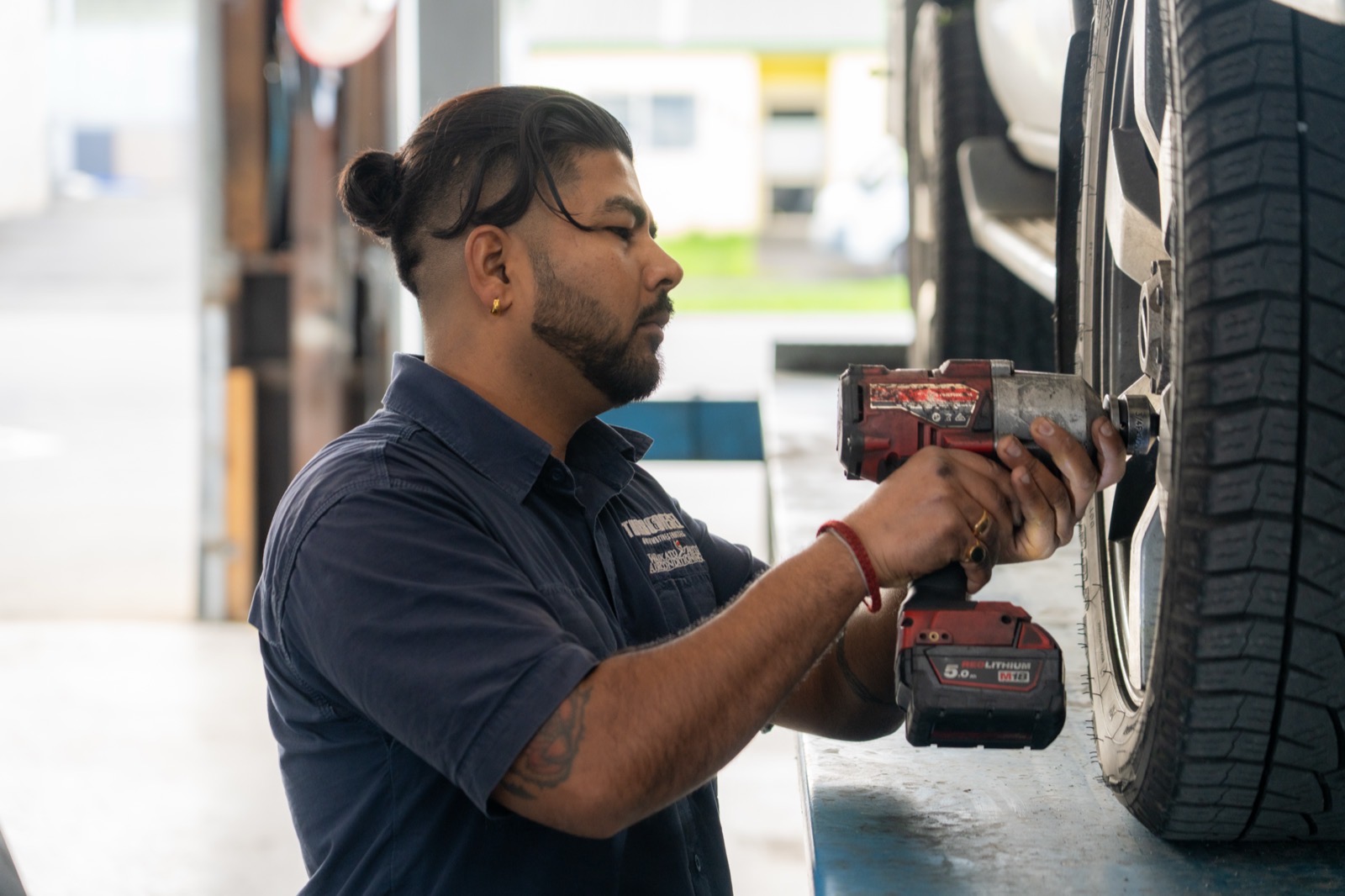
Real photos from the floor on Kahikatea Drive. Same team, same hoists, same standards on every job, from a quick check through to a full strip-down.







What you get when you book this service
13 checks performed on every visit
- Full brake inspection with pad thickness measured against manufacturer wear limits
- Rotor and disc thickness checked with a micrometer for scoring, warping and minimum spec
- Front and rear brake pad replacement with the correct friction compound for your vehicle
- Rotor replacement where discs are scored or below minimum thickness
- Brake caliper inspection for seized pistons, sticking slides and torn dust boots
- Brake fluid moisture test and full fluid flush and bleed to manufacturer specification
- Brake hose and hard line inspection for perishing, chafing and leaks
- Handbrake and park brake adjustment and function check
- Brake noise and pedal-feel diagnosis on the hoist and a confirming road test
- Wheel bearing and CV boot visual inspection while the wheels are off
- WOF brake criteria check on pads, discs, lines, fluid and park brake
- Wheel nuts torqued to manufacturer specification with a calibrated torque wrench
- Written report of pad and rotor measurements with photos of anything flagged
Want brake repairs done right?
Phone the workshop or send a quick form, whichever suits you. We come back with a clear next step.
4.7 from 50 Google reviews 20+ years 10,000+ vehicles serviced
Why Hamilton trusts us with brake repairs
-
Full brake system, not just pads
We measure rotors, calipers, fluid and lines, not just swap the pads, so a soft pedal or a pull gets fixed at the cause rather than masked.
-
WOF and brake repair in one visit
If your brakes fail a WOF, we quote the repair on the spot and can usually rectify it the same visit, with no second booking somewhere else.
-
Correct pads for your vehicle
We fit the right friction compound for your car, ute or light commercial, not a one-size-fits-all pad that fades under load or towing.
-
Measured, not guessed
Pad thickness and rotor spec are checked with proper gauges and a micrometer against manufacturer limits, so you only replace what is genuinely worn.
-
MTA workshop on Kahikatea Drive
Twenty-plus years of mechanical work in Frankton, with servicing, tyres and suspension available in the same visit.
Simple, transparent process
- 01
Book a brake check
Call (07) 847 3339 or use the contact form. Tell us the vehicle and what you are noticing, a noise, a soft pedal, a vibration or a WOF fail.
- 02
Inspect and measure
Wheels come off on the hoist, pads and rotors are measured against manufacturer limits, and calipers, hoses, fluid and the park brake are all checked.
- 03
Quote and confirm
We call you with exactly what the brakes need and a written estimate. Nothing gets done without your sign-off.
- 04
Repair and road test
Pads, rotors or fluid are replaced to spec, wheel nuts torqued, and a road test confirms a firm pedal and straight, quiet braking before hand-over.
Everything you should know about brake repairs
A workshop perspective on what's involved, how we run the job, and what shapes the final cost.
Why brake repairs in Hamilton need a proper workshop
Brake repair means replacing worn brake pads, replacing rotors where they are scored or below minimum thickness, and bleeding fresh fluid through the system so the pedal stays firm. Brakes are one of the most common Warrant of Fitness failure items, so worn pads, warped discs or a soft pedal need measuring and fixing at the cause, not a guess-and-swap, to put right safely.
Hamilton drivers stack up stop-start city kilometres on Victoria Street and the ring road, tow boats and trailers out to Raglan, and load utes for work runs to Cambridge and Te Awamutu. Every one of those puts heat and wear through the brakes. Pads wear at different rates front to rear, rotors warp when they overheat and cool unevenly, and brake fluid slowly absorbs moisture that lowers its boiling point. That is exactly why a brake job needs proper measurement rather than a quick look through the wheel.
Signs your brakes need attention
Worn brakes rarely fail all at once. They warn you first, and catching the signs early keeps a routine pad change from turning into a rotor replacement. Common signs your brakes need attention include:
- A squealing or grinding noise when you brake, the wear indicator or metal backing meeting the disc
- A brake pedal that feels soft, spongy, or sinks slowly toward the floor
- A vibration or pulsing through the pedal under braking, often a warped rotor
- The car pulling to one side when you brake
- A longer stopping distance, or brakes that feel less sharp than they used to
- A brake warning light on the dash
- Pads that look thinner than about 3 mm when you look through the wheel
If you notice any of these, book a brake check before your next WOF falls due. A grinding noise in particular means the friction material is gone and the metal backing plate is cutting into the rotor, which turns an easy pad change into a bigger, more expensive job.
What our brake repair work covers
We repair brakes on passenger cars, utes, 4WDs and light commercial vehicles, from a straightforward pad change to a full overhaul of pads, rotors, calipers and fluid. Every job starts with the wheels off and proper measurement, so the quote reflects what your brakes actually need.
Brake pads and rotors:
- Pad thickness measured against the manufacturer wear limit, not just eyeballed
- Rotor thickness checked with a micrometer for scoring, warping and minimum spec
- Pads replaced in axle pairs with the correct friction compound for your vehicle
- Rotors replaced when they are scored or below minimum thickness
- New brakes bedded in on the road test to seat the pad material evenly
Brake fluid:
- Fluid tested for moisture content, which lowers its boiling point and causes a spongy pedal
- Full flush and bleed to the manufacturer-specified fluid grade
- System bled properly so no air is left to soften the pedal
Brake noise and pedal diagnosis:
- Squeal, grind, groan and pedal-feel faults diagnosed on the hoist
- Calipers checked for seized pistons, sticking slides and torn dust boots
- Hoses and hard lines inspected for perishing, chafing and leaks
- Handbrake and park brake adjusted and function-checked
WOF brake failures: Brakes are a top WOF failure item, so a fair share of the brake work we do starts with a failed inspection. If your vehicle fails on pads, discs, fluid, lines or the park brake, we quote the repair on the spot and can usually rectify it the same visit. Because we run WOF inspections and repairs under one roof, there is no second trip to another workshop to get you back on the road.
How a brake repair job works at our Frankton workshop
Call (07) 847 3339 or use the contact form, and tell us the vehicle and what you are noticing, whether that is a noise, a soft pedal, a vibration, a pull, or a WOF that has just failed on brakes. We book you in and set aside enough time to inspect properly.
On the day, the vehicle goes on a hoist and the wheels come off. Pads and rotors are measured against manufacturer limits, calipers and slides are checked for free movement, hoses and lines are inspected for leaks, the brake fluid is tested for moisture, and the park brake is checked for travel and hold. If we find something outside the agreed scope, we call you with the fix and a written estimate first. Nothing happens without your sign-off.
Once the work is done, wheel nuts are torqued to manufacturer specification, the system is bled to a firm pedal, and a short road test confirms straight, quiet, confident braking. You leave with a written report of the pad and rotor measurements and photos of anything we flagged for next time.
What brake pads and rotors cost in New Zealand
We quote every brake job upfront and confirm any repair cost with you before we start, so there are no surprises at hand-over. What the work costs comes down to your vehicle and how much of the brake system needs attention. Across New Zealand, replacing brake pads on one axle typically costs between $150 and $400, and replacing pads and rotors together on one axle typically costs between $350 and $900, though the exact price depends on your vehicle and the extent of the work.
The main things that move the figure are:
- Pads versus pads and rotors: fresh rotors cost more than a pad-only job, and whether the discs also need replacing matters
- Vehicle type: a loaded ute, 4WD or light commercial has larger, heavier brakes than a small hatch
- Front versus rear: fronts do most of the stopping and often wear first, so a job may be one axle rather than all four corners
- Pad grade: the right friction compound for towing or heavy use differs from a light city car
- Extra parts: seized calipers, worn hoses or a fluid flush add to a straightforward pad change
For an accurate quote for your vehicle, get in touch with our team. For a written quote, call (07) 847 3339 or use the contact form.
Hamilton and Waikato coverage
Our workshop is on Kahikatea Drive in Frankton, a short drive from Hillcrest, Rototuna, Te Rapa, Chartwell and Glenview. Most brake work comes from Hamilton city drivers, but a steady share travels in from across the Waikato, work utes from Cambridge, Te Awamutu and Morrinsville, family cars from Huntly and Ngaruawahia, and towing vehicles heading out toward Raglan and the west coast.
Fleet operators book brake checks alongside servicing so vans and light trucks stay safe and compliant. The workshop is open Monday to Friday, 7:30 AM to 4:30 PM, and we will tell you up front whether pads or rotors are on the shelf or coming in overnight so we can have you back on the road quickly.
Last reviewed and updated
Common Questions
Everything you might want to know before booking.
How much should it cost to replace brake pads?
Brake pad prices vary with the vehicle, the pad quality and whether the rotors also need work. Across New Zealand, replacing brake pads on one axle typically costs between $150 and $400, though the exact price depends on your vehicle and the extent of the work. For an accurate quote for your vehicle, get in touch with our team on (07) 847 3339.
How much does it cost to replace brake pads and rotors in NZ?
Pads and rotors together cost more than pads alone, because the discs are the bigger part. Across New Zealand, replacing brake pads and rotors on one axle typically costs between $350 and $900, though the exact price depends on your vehicle and the extent of the work. For an accurate quote for your vehicle, get in touch with our team on (07) 847 3339.
What are the signs of worn brake pads?
The clearest signs are a squealing or grinding noise when you brake, a longer stopping distance, a vibration through the pedal, or the car pulling to one side. A brake warning light, or pads that look thinner than about 3 mm through the wheel, are also signs. A grinding noise usually means the pad material is gone and metal is contacting the rotor, so book in quickly.
What is the 30 30 30 brake rule?
The 30-30-30 rule is a bedding-in guide for new brake pads and rotors: make around 30 gentle stops from about 30 km/h with roughly 30 seconds between each to let the brakes cool. It beds the pad material evenly onto the rotor and reduces the risk of vibration and uneven wear. We bed new brakes in on the road test so they are ready when you collect the vehicle.
Should I replace all four brake pads at once?
Not necessarily. Front and rear brakes wear at different rates, and the fronts usually wear faster because they do most of the stopping, so it is normal to replace one axle at a time. We always replace pads in axle pairs, both front or both rear together, so braking stays even side to side. We measure all four and tell you exactly what is due.
How long do brake pads last?
Most brake pads last somewhere between 30,000 and 70,000 km, but it depends heavily on how and where you drive. Stop-start city driving, towing and loaded utes wear pads faster than open-road running, and rear pads on many vehicles last longer than fronts. The only reliable answer is a measurement, which is part of every service and WOF we do.
Will worn brakes fail a WOF?
Yes. Brakes are one of the most common Warrant of Fitness failure items. A WOF checks brake performance, pad and disc condition, fluid, lines and the park brake, so worn pads, scored rotors, a soft pedal or a leaking line will all fail. If your brakes fail a WOF with us, we quote the repair on the spot and can usually rectify it the same visit.
Do you offer WINZ-approved quotes on brake repairs?
Yes. We are a WINZ-approved workshop and can provide formal written quotes you can submit to Work and Income if a brake repair is creating financial pressure. Call (07) 847 3339 and we will put it together with you.
Related services
Need brake repairs?
Get a free quote, phone or form, whichever's easier.
4.7 from 50 Google reviews 20+ years 10,000+ vehicles serviced