

Not starting or not charging? We test it before we replace it
Alternator and starter motor repairs at Turbo & Diesel, an MTA workshop on Kahikatea Drive in Frankton. We test the charging and starting systems, the alternator, starter, battery and connections, before we replace anything, so you pay for the fault that is actually there. Done in-house on petrol and diesel vehicles, over twenty years serving the Waikato.
4.7 from 50 Google reviews 20+ years 10,000+ vehicles serviced
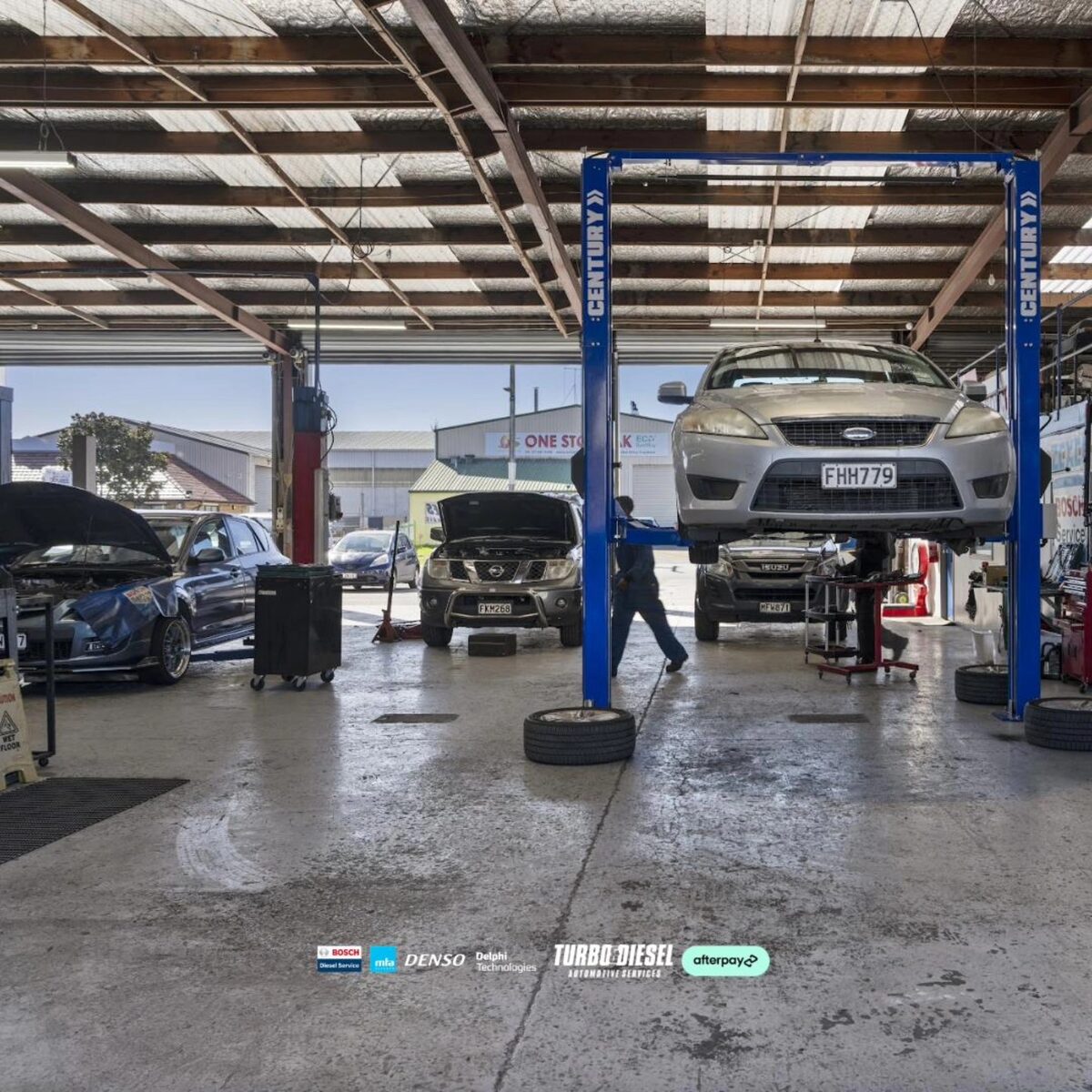
Why alternator & starter motor repairs is done differently here
Real photos from the floor on Kahikatea Drive. Same team, same hoists, same standards on every job, from a quick check through to a full strip-down.







What you get when you book this service
11 checks performed on every visit
- Charging system test measuring alternator output under load, not just a quick voltage read
- Battery condition and state-of-charge test, since a tired battery mimics a charging fault
- Starter motor draw test to see whether it is dragging, sticking or drawing too much current
- Battery terminals, earth straps and main cables checked for the corrosion and loose connections that cause both faults
- Warning-light and fault-code scan for charging and starting related codes
- Drive belt and tensioner checked, since a slipping belt starves the alternator
- Alternator replacement with a quality unit and correct belt tension where the test confirms it
- Starter motor replacement where testing shows it is the fault, not the battery or a connection
- Glow-plug and starting-circuit check on diesels that are slow or reluctant to fire
- Charging output rechecked after the repair to confirm the fix under load
- Written report covering what was tested, what was replaced and why
Want alternator & starter motor repairs done right?
Phone the workshop or send a quick form, whichever suits you. We come back with a clear next step.
4.7 from 50 Google reviews 20+ years 10,000+ vehicles serviced
Why Hamilton trusts us with alternator & starter motor repairs
-
We test before we replace
A flat battery, a slipping belt, a corroded earth and a failed alternator can all look the same from the driver's seat. We test the charging and starting systems properly so you pay for the part that is actually faulty, not a guess.
-
Alternators and starters done in-house
Charging and starting work is done here in our own workshop, so the whole job, diagnosis, part and fitting, stays under one roof rather than being sent away and marked up.
-
Battery and connections checked too
Most no-start and charging complaints come back to the battery, the earth straps or the cables, not the alternator or starter. We check those first, because replacing a good part fixes nothing.
-
Petrol and diesel
Diesels ask more of the starting system, with higher compression and glow plugs in the mix. We know how a hard-to-start diesel differs from a petrol no-start and test accordingly.
-
Twenty years on Kahikatea Drive
An MTA workshop that has looked after Waikato drivers' charging and starting systems for over twenty years, with the same team and the same standards.
Simple, transparent process
- 01
Test the whole circuit
We start with the battery and its connections, then measure charging output under load and test the starter draw. Most charging and no-start faults are traced here, before any part is touched.
- 02
Find the real fault
A slipping belt, a corroded earth, a flat battery and a failed alternator all present the same way. We isolate which one it is so the repair fixes the cause, not a symptom.
- 03
Quote the confirmed repair
Once the test points clearly at the alternator, starter or a connection, we quote that specific repair. You are not paying to replace a part on a hunch.
- 04
Replace and refit properly
The confirmed part is replaced with a quality unit, belts are set to correct tension, and terminals, earths and cables are cleaned and secured so the new part is not let down by an old connection.
- 05
Recheck under load
Charging output and starting are rechecked under load after the repair to confirm the fix, and you leave with a written report of what was tested and replaced.
Everything you should know about alternator & starter motor repairs
A workshop perspective on what's involved, how we run the job, and what shapes the final cost.
Why charging and starting faults in Hamilton need testing, not guessing
Almost every no-start and charging complaint comes down to one of a handful of parts: the battery, the alternator, the starter motor, the drive belt, or the cables and earth straps that tie them together. The catch is that from the driver's seat they all feel much the same. A car that will not turn over, or a battery that keeps going flat, could be any of them, and swapping the obvious part is how people end up paying twice.
That is why every charging and starting job here starts with a test, not a part. We measure the alternator's output under load, check the battery's condition and state of charge, test how much current the starter is drawing, and inspect the terminals, earths and cables. Very often the answer is not the expensive part at all. A slipping belt, a corroded earth or a battery at the end of its life will mimic a failed alternator or starter perfectly.
Getting that right saves you real money. There is no sense fitting a new alternator to fix a flat battery, or a new starter to fix a bad earth. We find the actual fault first, then quote the repair that fixes it.
What our alternator and starter work covers
Testing the whole circuit. The diagnosis looks at everything in the charging and starting loop, because a fault in one part shows up as a symptom in another.
- Charging output measured under load, not a quick voltage check
- Battery condition and state-of-charge tested
- Starter motor current draw tested for dragging or sticking
- Terminals, earth straps and main cables checked for corrosion and looseness
- Drive belt and tensioner checked for slip
- Fault-code scan for charging and starting related codes
The charging system. When the test confirms the alternator, we replace it with a quality unit and set the belt to correct tension, then recheck output under load so we know the fix holds. We also make sure the battery and connections are sound, because a new alternator working through a corroded earth is a repair that will not last.
The starting system. A confirmed starter fault, a starter that drags, sticks or draws too much current, is replaced with a quality unit. On diesels, we also check the glow-plug system and starting circuit, because a slow-to-start diesel is often a glow-plug issue rather than the starter itself.
Batteries and connections. Most no-start calls come back to the battery, the earths or the cables. We test and check these first, and where the battery is simply at the end of its life we will tell you that rather than sell you an alternator or starter you do not need.
This is charging and starting work done in-house at our Frankton workshop. Where a fault turns out to sit in the deeper vehicle wiring or electronics, we will tell you plainly and point you the right way rather than guess at it.
How an alternator or starter job works at our Frankton workshop
Phone (07) 847 3339 with the symptoms: a warning light, a slow or dead crank, a battery that keeps going flat, or dimming lights. If the vehicle will still run we ask you to bring it in; if it will not start we will talk you through the safest way to get it to us.
On the day, the testing comes first. We check the battery and its connections, measure charging output under load, and test the starter draw, so we can point clearly at the actual fault. We then quote that specific repair, whether it is the alternator, the starter, a belt, or a battery and connection clean-up, before any part is fitted.
Once approved, the confirmed part is replaced with a quality unit, belts are tensioned correctly, and the connections are cleaned and secured. We recheck charging and starting under load before you collect the vehicle, and you leave with a written report covering what was tested, what was replaced and why.
What affects the cost of an alternator or starter repair
The parts vary a lot between vehicles, and the diagnosis often changes the job entirely, so we test before we quote:
- Which part it actually is - a battery or a belt is far cheaper than an alternator or starter, and testing tells us which
- The vehicle - alternators and starters for common Japanese vehicles cost less than diesel or larger units
- Access - some starters and alternators are buried and take more time to reach than others
- Part grade - a quality replacement unit with a warranty versus a budget part, matched to your vehicle
Across New Zealand, an alternator replacement typically costs between $450 and $1,100 fitted and a starter motor a similar range, though the diagnosis often finds a cheaper fault. For a quote for your vehicle, call (07) 847 3339 or use the contact form.
Hamilton and Waikato coverage
Our workshop is on Kahikatea Drive in Frankton, three minutes from the Hamilton ring road. Charging and starting work comes to us from across the Waikato: daily drivers from Hillcrest, Rototuna, Te Rapa and Chartwell, work utes from Cambridge, Te Awamutu, Morrinsville, Huntly and Ngaruawahia, and fleet vehicles that cannot afford to be sitting with a flat battery.
The workshop is open Monday to Friday, 7:30 AM to 4:30 PM, and most charging and starting repairs are a same-day job once the fault is confirmed. If your vehicle is slow to start, showing a charging light, or flattening its battery, call (07) 847 3339 before it leaves you stranded.
Last reviewed and updated
Common Questions
Everything you might want to know before booking.
What are the signs of a failing alternator?
The common signs are a battery or charging warning light on the dash, headlights that dim at idle and brighten with revs, a flat battery that keeps coming back, electrical accessories acting up, or a whining or grinding noise from the front of the engine. A car that starts fine then dies shortly after is a classic charging failure. Any of these is worth a charging test before you are stranded.
How much does it cost to replace an alternator in NZ?
It depends on the vehicle and the alternator, but across New Zealand an alternator replacement typically costs between $450 and $1,100 fitted, with diesels and larger units at the higher end and common Japanese vehicles at the lower end. Because a flat battery or a slipping belt can look like a charging fault, we test first so you are not paying for an alternator you did not need. Call (07) 847 3339 for a quote for your vehicle.
How do I know if it is the starter motor or the battery?
They feel different. A flat battery usually gives you dim dash lights and a rapid clicking or nothing at all, while a failing starter often gives you a single loud click, an intermittent no-start that comes and goes, or a slow, laboured crank even with a good battery. The only way to be sure is to test both, which is exactly what we do before replacing either, because they are very different parts and very different bills.
Is it worth fixing an alternator, or should I replace the whole thing?
On most vehicles, replacing the alternator as a unit is the sensible, lasting repair, and that is usually what we recommend. Some alternators can be rebuilt, but on common vehicles a quality replacement unit is often similar money and comes with a warranty, so it is the better value. We will tell you honestly which makes sense for your vehicle rather than push the dearer option.
Do you test the alternator and starter before replacing them?
Always. Testing first is the whole point. We measure charging output under load, test the battery and its connections, and check the starter draw, so we replace the part that is genuinely faulty rather than guess. It is common for a charging or no-start complaint to turn out to be a battery, a belt or a corroded earth, all far cheaper than the alternator or starter people assume.
My diesel is slow to start in the cold, is that the starter?
Not necessarily. On a diesel, slow or reluctant cold starting is often the glow plugs or the glow-plug circuit rather than the starter motor or battery, though a tired battery makes it worse. We check the whole starting picture on a diesel, the battery, the starter draw and the glow-plug system, so the right part gets attention rather than the obvious one.
Can a warning light on the dash tell you which part has failed?
A battery or charging light points at the charging system, but it does not tell you whether the fault is the alternator, the belt, the battery or the wiring, and a no-start often throws no light at all. That is why we test rather than read the light alone. The dash light is a useful starting point, not a diagnosis.
Related services
Need alternator & starter motor repairs?
Get a free quote, phone or form, whichever's easier.
4.7 from 50 Google reviews 20+ years 10,000+ vehicles serviced