

Turbo trouble? We rebuild them to last
Turbocharger repair Hamilton work at Turbo & Diesel, a Garrett certified dealer on Kahikatea Drive in Frankton. Boost diagnostics, VNT vane cleaning, actuator replacement, bearing rebuilds and full unit replacement. MTA workshop with over twenty years of specialist diesel and turbo experience for Waikato drivers and fleets.
4.7 from 50 Google reviews 20+ years 10,000+ vehicles serviced
Why turbocharger repair & servicing is done differently here
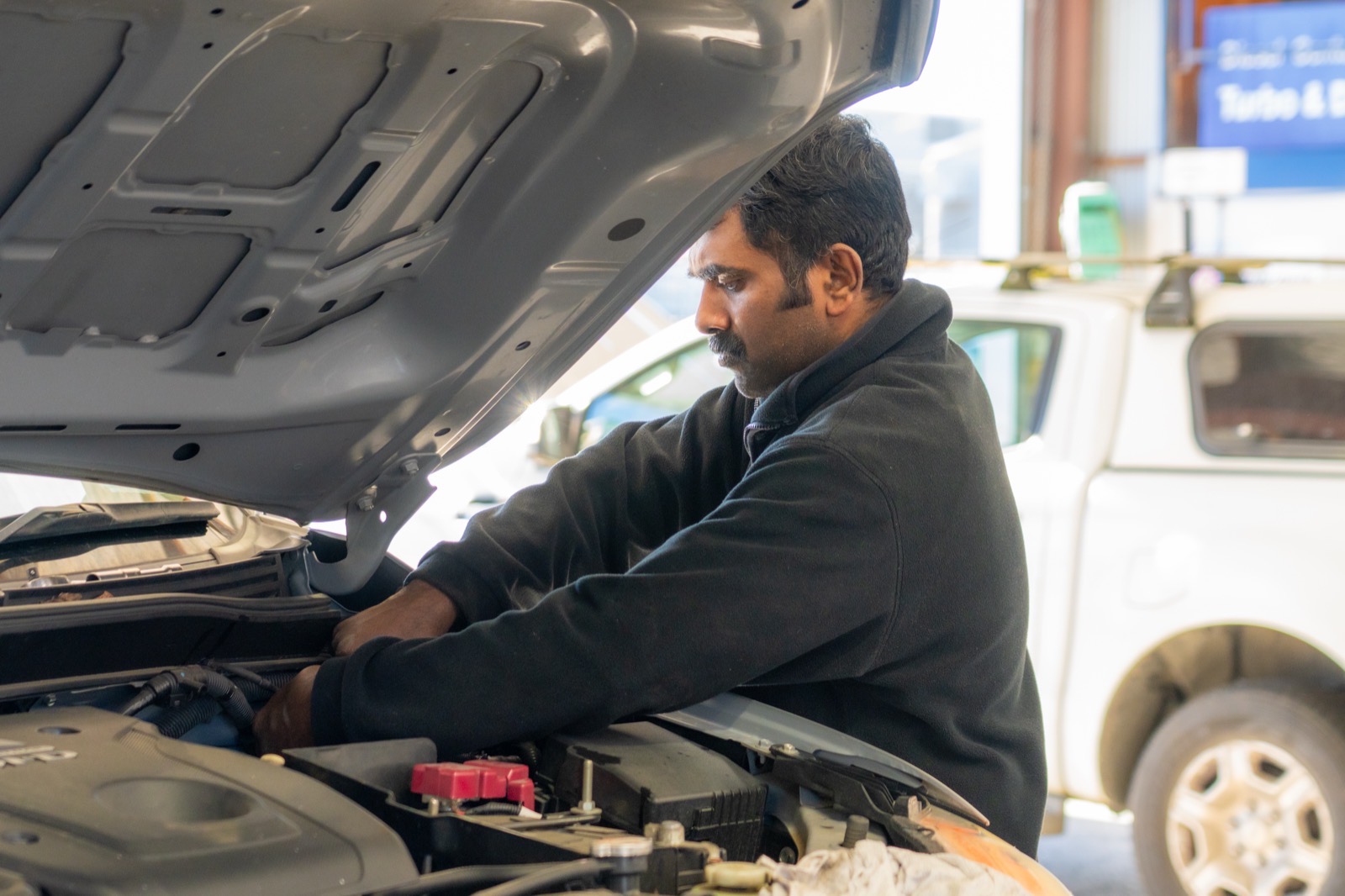
Real photos from the floor on Kahikatea Drive. Same team, same hoists, same standards on every job, from a quick check through to a full strip-down.







What you get when you book this service
13 checks performed on every visit
- Boost pressure logging under load with manufacturer-level scan tools, compared against factory specification
- Variable Nozzle Turbine (VNT) vane condition check and ultrasonic carbon cleaning where vanes are sticking
- Wastegate and electronic actuator testing, recalibration or replacement
- Compressor and turbine wheel inspection for tip damage, blade rub or contact marks
- Bearing housing shaft play measurement against Garrett service tolerances
- Oil supply and oil drain line inspection, restricted feed lines and coked drain lines are a common root cause
- Intercooler and charge-air boot leak testing under pressure
- Crankcase ventilation and intake restriction check, a blocked filter or PCV system kills a turbo fast
- Turbocharger rebuild with genuine Garrett internals where the unit allows
- Replacement with authorised genuine or remanufactured units when rebuild is not economical
- Boost sensor, MAP, MAF and ECM diagnostics for boost-related fault codes
- Pre-fitment oil supply flush and post-fitment idle priming to protect the new bearings
- Final road test with logged boost data and a written report on findings
Want turbocharger repair & servicing done right?
Phone the workshop or send a quick form, whichever suits you. We come back with a clear next step.
4.7 from 50 Google reviews 20+ years 10,000+ vehicles serviced
Why Hamilton trusts us with turbocharger repair & servicing
-
Garrett certified dealer
Factory training, manufacturer-spec test data and direct parts routes for passenger and commercial turbo work.
-
Diagnosis before replacement
We measure boost, intake restriction, oil pressure and actuator behaviour before recommending a swap, many turbo faults are not the turbo.
-
VNT cleaning capability
Variable-vane carbon fouling is often dismissed as a failed turbo. Where vanes are intact, ultrasonic cleaning restores function without a rebuild.
-
Cars, fleet and industrial diesels
From a Hilux daily driver through to fleet trucks and stationary industrial diesels, the bench experience covers it.
-
Twenty years on Kahikatea Drive
Turbo work has been part of our diesel specialty since 2003, same workshop, same MTA standards, same diagnostic discipline.
Simple, transparent process
- 01
Symptom and live data
We log boost pressure under load, read fault codes and freeze-frame data, and check intake restriction and oil pressure before touching the turbo itself.
- 02
Bench inspection
If removal is justified, the turbo comes off and onto the bench for shaft play, vane condition, wheel damage and oil contamination assessment.
- 03
Clean, rebuild or replace
VNT vanes ultrasonically cleaned where viable, bearings rebuilt with genuine Garrett internals, or a genuine or authorised reman unit fitted.
- 04
Address the root cause
Oil feed and drain lines, intercooler integrity, intake restriction and PCV system all checked and corrected so the repair holds.
- 05
Prime, road test and verify
New unit pre-oiled and idle-primed, boost pressures logged against factory spec on the road test, written report at pickup.
Trained to the standards behind your vehicle
Everything you should know about turbocharger repair & servicing
A workshop perspective on what's involved, how we run the job, and what shapes the final cost.
Why turbocharger repair in Hamilton needs more than a parts swap
A modern turbocharger spins above 200,000 rpm and runs on a thin film of pressurised engine oil. The clearances inside are measured in microns. When it whistles, smokes, loses boost or starts leaking oil, the temptation is to fit a new unit and move on, but a turbo rarely fails for no reason.
Any of these can produce symptoms that look exactly like a failed turbocharger:
- Restricted oil feed or coked drain line
- Torn intercooler hose
- Sticking VNT actuator
- Blocked air filter
- Worn boost sensor
Replace the turbo without finding the cause and the new one fails inside weeks. Hamilton drivers see this most on Hilux, Ranger, BT-50, Triton and Pajero utes, plus HiAce-based motorhomes, and on fleet trucks from across the Waikato.
What our turbocharger repair work covers
We work on every common turbocharger platform on New Zealand roads:
- Garrett GT, GTB and VNT series
- BorgWarner KKK and EFR
- IHI RHF
- Mitsubishi TD and TF series
- Commercial diesel turbo units
The diagnostic starts before the turbo comes off. Manufacturer-level scan tools log boost pressure under load on a road test, freeze-frame data is pulled from the ECM, and actuator response is commanded through its full range to confirm the boost-control mechanism is moving. Intake restriction is measured, the intercooler and charge-air boots are pressure-tested for leaks, and oil supply pressure to the turbo feed line is checked.
Only when live data points clearly at the turbo does the unit come off. On the bench we:
- Measure shaft play axially and radially against Garrett service tolerances
- Inspect compressor and turbine wheels for tip contact, foreign object damage or blade rub
- Assess the bearing housing for oil contamination
Where wheels are sound and the housing is good, a rebuild with genuine internals (bearings, seals, thrust washer and a fresh dynamic balance) is the right path. Where damage has gone too far, a genuine Garrett replacement or a properly remanufactured unit from an authorised reman programme goes in instead.
VNT vane fouling (diesel soot building up on the variable vanes and making them stick) is treated with ultrasonic carbon cleaning where the vanes are intact. That alone resolves a large share of "failed turbo" cases on diesel utes that come through.
How a turbo repair job works at our Frankton workshop
Phone (07) 847 3339 with the symptoms: a whistle on boost, blue smoke at startup, a power loss into limp mode, a fault code referencing boost pressure or wastegate position. We book the vehicle in for a diagnostic slot, usually one to two hours.
On the day, the scan tool reads fault codes and freeze-frame data, and a road test logs boost behaviour under real load. If the picture points at the turbo, we measure shaft play through the inlet, check oil supply pressure at the feed line and pressure-test the intercooler system before committing to removal. Components go onto the bench, and results either confirm the diagnosis or redirect us to the root cause: a torn intercooler boot, a clogged PCV system, a restricted air filter, a contaminated oil supply.
After fitment, the new bearing is pre-oiled, the engine idle-primed, the system leak-tested, and the vehicle road-tested against factory boost specification. You collect with a written report covering what was found, what was done and the root-cause work that protects the new unit.
What affects the cost
Turbocharger work has wider cost variation than most repair jobs, so each one is quoted on its own merits:
- Parts availability: a current Toyota or Ford diesel platform with widely stocked Garrett units is meaningfully different from an older European turbo with a longer reman lead time
- Severity: a VNT cleaning where vanes are intact is a different job from a full rebuild, which is different again from a complete unit replacement with downstream damage from a contaminated oil supply
- Diagnostic time: clear fault codes with strong supporting data take an hour; intermittent boost losses that only appear under specific load conditions take longer to capture
- Parts choice: genuine vs authorised remanufactured Garrett units moves the price meaningfully; on common platforms a properly remanufactured unit is often the better commercial answer
- Access: engines where the turbo is buried under the inlet manifold carry more labour hours
For a quote, call (07) 847 3339 or use the contact form.
Hamilton and Waikato coverage
Our workshop is on Kahikatea Drive in Frankton, three minutes from the Hamilton ring road. A large share of our turbo work comes from across the Waikato:
- Ute owners from Cambridge, Te Awamutu and Tamahere
- Fleet operators from Morrinsville, Huntly and Ngaruawahia
- Motorhomes and contracting diesels heading toward Raglan and Otorohanga
- Commercial trucks from across the region
We stock or source common turbo platforms next-day through authorised Garrett channels, and confirm the parts route at the diagnostic stage so there are no surprises on timing. The workshop runs Monday to Friday, 7:30 AM to 4:30 PM.
Last reviewed and updated
Common Questions
Everything you might want to know before booking.
What are the symptoms of a bad turbocharger?
Loss of power under load, a high-pitched whistle or siren noise, oily residue in the intake or intercooler, blue or grey exhaust smoke, and check-engine codes referencing boost pressure or wastegate position are the common signs. A sudden drop into limp mode after a hard pull also points at boost. A live data log under load and a quick visual on the intercooler boots usually narrow it down inside an hour.
Can a turbocharger be repaired or does it need replacing?
Many turbos can be rebuilt, bearings, seals, thrust washers and a fresh balance, provided the compressor and turbine wheels are undamaged and the housing is intact. If the wheels have made contact, the shaft is bent, or the bearing housing is cracked, replacement is the right call. We bench-inspect first and tell you which path makes sense for your specific vehicle.
How long do turbochargers last?
On a well-maintained modern engine, 200,000 to 300,000 km is realistic. Turbo life depends almost entirely on oil quality, oil change interval, intake cleanliness and how the engine is shut down after hard running. Skipped oil services, contaminated fuel and a habit of switching off straight after a motorway run all shorten turbo life significantly.
What causes a turbocharger to fail?
Oil starvation, oil contamination, foreign object damage through the intake, excessive exhaust temperatures, and worn-out shaft bearings due to a missed service interval are the main causes. Restricted oil drain lines from sludge and a blocked crankcase breather are quiet killers, they push oil past the seals and look like a leaking turbo when the real fault is upstream.
Why does my turbo whistle or whine?
A faint whoosh under boost is normal. A loud whistle, siren or chirp usually means a compressor wheel rub, worn shaft bearings letting the wheel touch the housing, a boost leak forcing the turbo to work harder, or a sticking VNT actuator. We diagnose with a pressure test on the intercooler system and a bench inspection of the turbo if the noise is internal.
What is a VNT turbo and can the vanes be cleaned?
VNT stands for Variable Nozzle Turbine, the turbocharger has movable vanes around the turbine wheel that change the exhaust gas flow angle to deliver boost across a wider rev range. Diesel soot builds up on those vanes and makes them stick. Where the vanes are intact, ultrasonic cleaning restores movement and boost response. Where wear is too far gone, the cartridge or whole unit is replaced.
How long does a turbo rebuild or replacement take?
A diagnostic and bench inspection is usually a few hours. A turbo replacement is typically one to two days depending on access on the vehicle and parts availability, a Hilux or Ranger is faster than a tightly-packaged European engine. A full rebuild with balancing is two to three days. We confirm timing once we have inspected the vehicle and identified the root cause.
How do I know if it's the turbo or the actuator?
The actuator, wastegate or VNT solenoid, moves the boost control mechanism. A failed actuator can mimic a failed turbo because the symptoms are identical: low boost or limp mode. On the diagnostic, we command the actuator through its range with the scan tool and confirm physical movement. If the actuator does not respond or sticks, it gets repaired or replaced before any decision on the turbo itself.
Will fitting a new turbo on its own fix the problem?
Not if the original failure cause is still there. Oil supply restriction, a blocked drain, a torn intercooler hose, a contaminated intake or a clogged air filter will take the new unit out the same way. Every replacement job at our workshop includes an oil supply check, drain line clean, intercooler pressure test and intake inspection. That is what gives the new turbo a long life.
Do you work on turbos for trucks and industrial diesels?
Yes. Turbo units on commercial light trucks, fleet vans, agricultural diesels and stationary industrial engines around the Waikato are a regular part of our work. We have direct parts access and the bench equipment to rebuild or supply replacement units across the common commercial platforms.
Is it worth rebuilding a turbo or just replacing it?
On older or harder-to-source units, rebuild with genuine Garrett internals can be the better commercial answer, particularly when the housing and wheels are sound. On a common modern platform with a competitively priced reman unit available, replacement is often the more sensible call. We weigh both options on every job and recommend the path that gives the best value.
Do you provide WINZ-approved quotes on turbo repairs?
Yes. We are a WINZ-approved workshop and can put together a formal written quote for a turbo repair or replacement that you can submit to Work and Income if the cost is creating financial pressure. Call (07) 847 3339 and we will sort the quote with you.
Related services
Need turbocharger repair & servicing?
Get a free quote, phone or form, whichever's easier.
4.7 from 50 Google reviews 20+ years 10,000+ vehicles serviced