

Petrol engine repairs done right the first time
Petrol vehicle repair and servicing at Turbo & Diesel, manufacturer-level scan tools, direct-injection induction cleans, turbo-petrol checks and timing work for Toyota, Honda, Mazda and Nissan on Kahikatea Drive in Frankton. Modern direct-injection and turbocharged platforms covered. Twenty years on the same site.
4.7 from 50 Google reviews 20+ years 10,000+ vehicles serviced
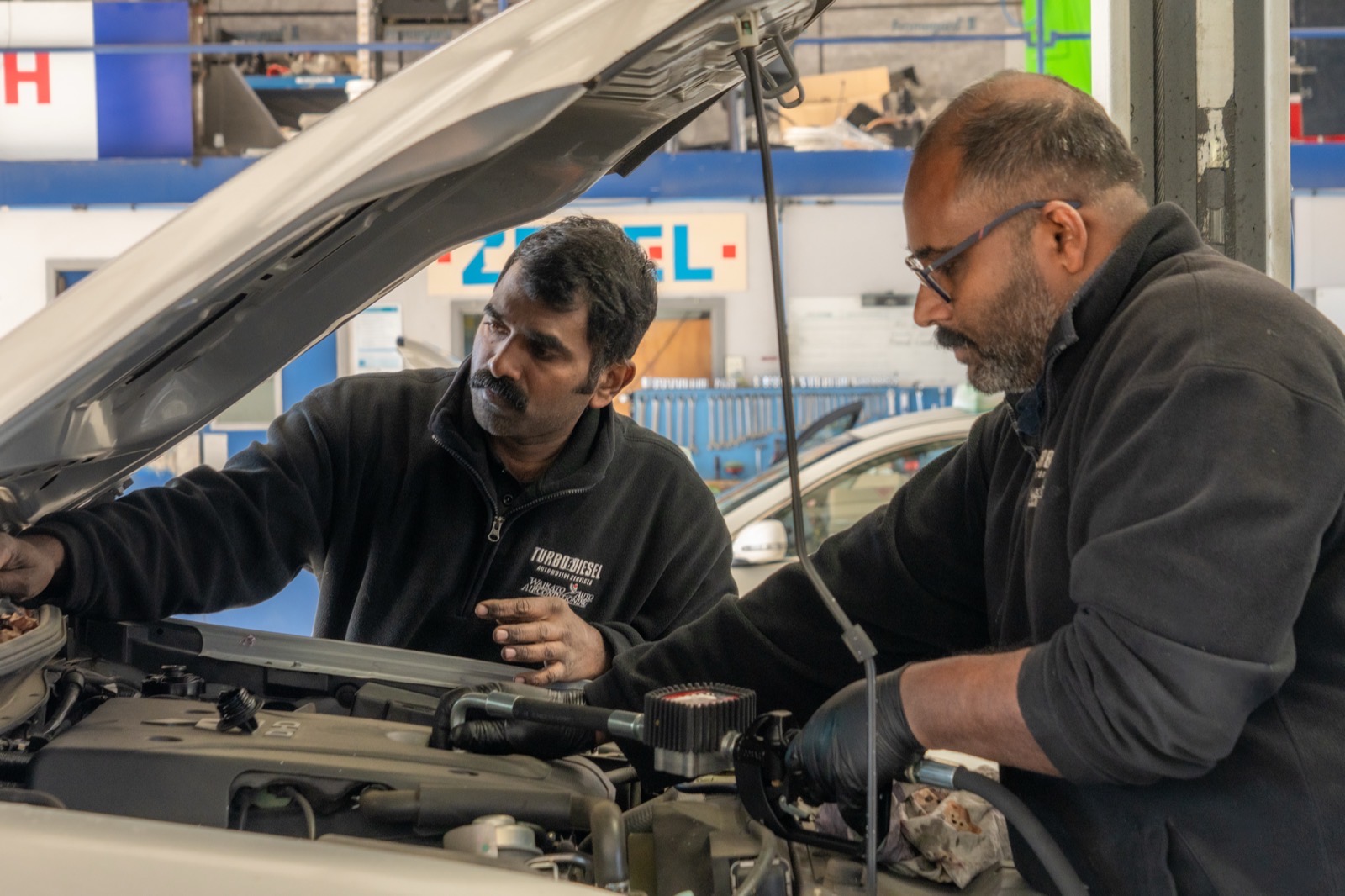
Why petrol vehicle repair is done differently here
Real photos from the floor on Kahikatea Drive. Same team, same hoists, same standards on every job, from a quick check through to a full strip-down.







What you get when you book this service
12 checks performed on every visit
- Manufacturer-spec scan and live data on the engine and transmission control systems
- Direct-injection induction clean to address intake valve carbon build-up
- Spark plug replacement using manufacturer-grade iridium or platinum plugs at correct interval
- Ignition coil and lead testing for misfire and rough-running complaints
- Timing belt or timing chain inspection and replacement to the manufacturer interval
- Turbocharger inspection on turbo-petrol engines, boost-pressure and wastegate checks
- Engine oil and OEM-spec oil filter replacement using the manufacturer's grade and viscosity
- Cooling system inspection including thermostat, water pump and hose condition
- Exhaust system inspection including catalytic converter and oxygen sensor checks
- Brake fluid moisture test and pad and rotor service
- Pre-purchase petrol inspection covering engine, drivetrain and underbody
- Adaptive value reset, ECU updates where supported, and full written report on collection
Want petrol vehicle repair done right?
Phone the workshop or send a quick form, whichever suits you. We come back with a clear next step.
4.7 from 50 Google reviews 20+ years 10,000+ vehicles serviced
Why Hamilton trusts us with petrol vehicle repair
-
OE-level diagnostics
Manufacturer-grade scan tools read the engine and transmission control modules properly, not just a generic engine fault code.
-
Direct injection know-how
Modern petrol engines build carbon on intake valves where port fuel never washes them. We carry out induction cleans most general workshops skip.
-
Turbo-petrol experience
Downsized turbocharged petrol blocks run hard. We check boost pressure, wastegate operation and oil supply so a turbo problem is caught early.
-
Timing done right
Belt or chain, we replace timing components at the manufacturer interval with the correct kit, because a skipped interval can write off an engine.
-
Petrol and diesel in one workshop
One workshop, one history, one team that knows every vehicle in your driveway. WINZ-approved for written repair quotes.
Simple, transparent process
- 01
Scan and live data
Manufacturer-level scan tool reads fault codes across the engine and transmission modules, with live data logged on a road test under load.
- 02
Confirm the symptom
If a misfire, boost fault or rough idle is reported, we reproduce it and log the data so we are working from evidence, not a guess.
- 03
Diagnose root cause
Codes tell you what the ECU is unhappy about, not always why. We confirm the underlying fault before swapping parts.
- 04
Repair and verify
OEM or OE-equivalent parts fitted, adaptive values reset where required, and the fix verified against live data on a final road test.
- 05
Report and hand back
Written report covers what was found, what was done, and what to keep an eye on at the next service or WOF.
Trained to the standards behind your vehicle



Everything you should know about petrol vehicle repair
A workshop perspective on what's involved, how we run the job, and what shapes the final cost.
Why modern petrol work in Hamilton needs a specialist
Modern petrol engines have lifted the bar well beyond a points-and-plugs tune. Direct injection, twin variable valve timing, electronic throttle, downsized turbocharged blocks and GDI fuel pressure measured in the hundreds of bar all mean a generic code reader only scratches the surface.
The Hamilton fleet reflects this:
- Corollas, Camrys and RAV4s
- Turbo-petrol hatchbacks
- Mazda SkyActiv petrol engines
- Subaru boxers
- Honda VTEC and turbo blocks
- Nissan and Mitsubishi petrol drivetrains
The cost of getting the diagnosis wrong on any of these is steep, in unnecessary parts and in time off the road. A workshop that reads the engine ECU at manufacturer level, logs live data and confirms a fault before touching a spanner saves you money the parts-cannon approach never will.
What our petrol repair and servicing work covers
We work on the petrol platforms commonly sold across New Zealand, Toyota and Lexus, Honda, Nissan, Subaru, Mazda, Mitsubishi and Suzuki. Diagnostics start with a manufacturer-level scan tool reading the engine and transmission control modules, not a generic engine code. Live data is logged on a road test under load so symptoms are seen as they actually happen.
Direct-injection and ignition:
- Induction clean to clear carbon off intake valves where port fuel never reaches, a job most general workshops skip
- Spark plugs replaced at the manufacturer's interval with the correct iridium or platinum part, gapped to spec
- Ignition coils and leads tested when a misfire is reported
Timing:
- Timing belts replaced on the manufacturer interval with the correct kit, tensioner and water pump where the design shares them
- Timing chains checked for stretch through cam timing data on the scan tool
Turbo-petrol engines:
- Boost pressure, wastegate or actuator operation and turbo oil supply all inspected
- A turbo problem caught early is a fraction of the cost of a failure
Engine and supporting systems:
- Engine oil to the manufacturer-specified grade and viscosity with an OEM filter
- Cooling system inspected: thermostat, water pump and hose condition
- Exhaust, catalytic converter and oxygen sensors checked
- Adaptive values reset where required; ECU software checked for updates where supported
- Road test before collection
How a petrol job works at our Frankton workshop
Phone (07) 847 3339 with what the car is doing, a check engine light, a misfire, rough idle on a direct-injection petrol, loss of boost on a turbo engine, a drop in fuel economy. The vehicle comes in for an initial diagnostic. The scan tool reads the engine and transmission modules, freeze-frame and historic codes are pulled, and a road test logs live data under load.
If a misfire or boost fault is reported, we reproduce it and log misfire counts, fuel trims and boost pressure so we are working from evidence, not a guess. Findings are explained in plain language before repairs are scheduled. After the work is completed, adaptive values are reset and a final road test confirms the symptom is gone. You collect with a written report.
What affects the cost
Modern petrol work has more cost variables than older mechanical jobs:
- Parts availability: a common Toyota or Honda with widely stocked parts is straightforward; a less common turbo-petrol or European component can take longer
- Severity: a single failed ignition coil is a different job from a misfire that has also damaged a catalytic converter; an induction clean is a different job from a full timing belt service
- Diagnostic time: clear codes with strong live data resolve quickly; intermittent faults take longer
- Access: engines where the intake manifold has to come off to reach plugs or valves push the labour share up
Genuine, OEM-equivalent and remanufactured parts each have their place and we will tell you which makes commercial sense. For a quote, call (07) 847 3339 or use the contact form.
Hamilton and Waikato coverage
Our workshop is on Kahikatea Drive in Frankton, three minutes from the Hamilton ring road. Petrol customers come from across the wider Waikato:
- Corollas and Mazda3s from Cambridge and Te Awamutu
- Camry and RAV4 daily-drivers from Morrinsville and Huntly
- Subaru and Honda owners from Ngaruawahia and Raglan
Many are owners deciding whether to keep their car or trade it. An honest diagnosis is the answer that decision needs. The workshop is open Monday to Friday, 7:30 AM to 4:30 PM.
Last reviewed and updated
Common Questions
Everything you might want to know before booking.
How often should I service my petrol car?
Most modern petrol cars need a service every 12 months or 10,000 to 15,000 kilometres, whichever comes first. A service covers engine oil, oil filter, air filter, spark plugs at interval, coolant and brake fluid, plus an inspection of belts, hoses and brakes. We always work to the manufacturer's schedule for your vehicle.
What does a petrol service include?
A full petrol service covers engine oil and filter, air and cabin filters, spark plug inspection or replacement, a brake inspection, coolant and brake fluid checks, and a manufacturer-level scan of the engine and transmission modules. You get a written report on collection covering what was found and what is coming up.
How often should spark plugs be changed in a modern petrol engine?
Most modern petrol engines run iridium or platinum plugs with a manufacturer interval between 60,000 and 100,000 kilometres. Turbo-petrol engines often run shorter intervals because they run hotter and at higher cylinder pressures. Worn plugs hurt economy, cause misfires and over time damage catalytic converters. We replace at the manufacturer's interval with their specified plug, gapped to spec.
What is direct-injection carbon build-up?
Direct-injection petrol engines spray fuel straight into the cylinder, which means fuel never washes the intake valves the way it does on a port-injection engine. Over time, oil vapour from the PCV system bakes onto the valves and chokes airflow. Symptoms are rough idle, misfire, loss of power and poor economy. An induction clean or manual walnut blast restores airflow.
My check engine light is on, what should I do?
Book a scan. A check engine light can mean anything from a loose fuel cap to a misfire that is damaging the catalytic converter. We read the fault code at manufacturer level, pull freeze-frame data and run a road test so we know what triggered it before quoting any repair. Driving on a flashing engine light risks expensive damage.
Do turbo-petrol engines need different servicing?
Yes, in a couple of ways. Turbo-petrol engines are harder on engine oil, so oil quality and the service interval matter more. They also run hotter, so coolant condition and the cooling system are checked carefully. We inspect boost pressure, the wastegate or actuator, and the turbo oil supply, because catching a turbo issue early is far cheaper than a failure.
When should a timing belt be replaced?
Timing belts are replaced on time or distance, commonly every 90,000 to 100,000 kilometres or a set number of years, whichever comes first. A snapped belt on an interference engine usually bends valves and can write the engine off. If your car has a timing chain it normally lasts the life of the engine, but a stretched chain still shows up on a scan as cam timing drift.
Why is my petrol engine misfiring or running rough?
Common causes are worn spark plugs, a failing ignition coil, carbon on direct-injection intake valves, a vacuum leak, or a fuel delivery fault. We scan for misfire counts per cylinder, check the coils and plugs, and confirm the cause with live data before replacing anything, so you are not paying for parts that were never the problem.
Can you do a pre-purchase inspection on a petrol car?
Yes. A pre-purchase petrol inspection covers a manufacturer-level scan for stored faults, an engine and drivetrain check, brake and underbody inspection, and a road test. On a turbo-petrol or direct-injection car this is the smartest spend before signing, because it surfaces problems a quick test drive never will.
Why has my fuel economy dropped?
A drop in economy usually points at worn spark plugs, carbon build-up on a direct-injection engine, a dragging brake, a tired oxygen sensor, or low tyre pressures. We scan fuel trims, check the ignition system and confirm the cause rather than guessing. Often it is a cheap fix once the real reason is found.
Are your repairs cheaper than the main dealer?
Generally yes, while still fitting genuine or OEM-equivalent parts and following manufacturer specifications. We will show you the parts coming off and the parts going on, and the written report explains exactly what was done. WINZ-approved written quotes are available where a major repair is creating financial pressure.
Related services
Need petrol vehicle repair?
Get a free quote, phone or form, whichever's easier.
4.7 from 50 Google reviews 20+ years 10,000+ vehicles serviced